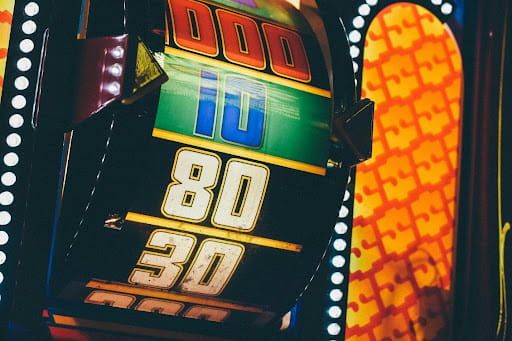
The most common myth about a dormant slot machine is that it “builds up” a jackpot or becomes “due” for a win. People often imagine the machine sitting there, accumulating digital energy like a coiled spring, ready to pop the moment someone drops a twenty into the tray after a long hiatus.
In reality, the heart of the slot machine—the Random Number Generator (RNG)—doesn’t care about time. In most modern cabinets, as long as the machine is plugged in (even if the screen is off or in “sleep mode”), the RNG is cycling through thousands of number combinations every single second.
When a machine sits unplayed for three weeks, it hasn’t moved any closer to or further away from a payout. The math remains static. The moment you press “Spin” after a twenty-day vacancy, the RNG picks whatever number string is active at that millisecond. The machine has no memory of its loneliness; it simply resumes its mathematical duty.
While the software is indifferent to the passage of time, the hardware is a different story. Slot machines are high-performance computers housed in heavy steel cabinets, and like any computer, they don’t actually like sitting idle.
Casinos are surprisingly dusty environments. Between the high-traffic carpets and the ventilation systems, fine particulates are always in the air.
When a machine is running, its internal fans create a constant airflow that, while sucking in some dust, also keeps components cool. When a machine sits idle for weeks, dust begins to settle into the crevices of the motherboards and cooling fins. If a machine is powered back on after a long break without a quick internal vacuum, the settled dust can cause a “burning” smell or, worse, overheating.
Every slot machine has a small CMOS battery on its brain box (the logic board). This battery is responsible for maintaining the machine’s “memory”—things like the current credit balance, the game configuration, and the recent history of spins—in case of a power flicker.
While these batteries usually last for years, a machine that is completely powered down for weeks relies solely on that battery. If the battery was already weak, a long period of inactivity is usually when it finally dies. When technicians try to “wake” the machine, they’ll encounter a “CMOS RAM Error,” which requires a manual fix before the game can load.
For machines left “On” but unplayed, “burn-in” is the enemy.
Even with modern LCD and OLED displays, static images (like a “Game Over” screen or a specific jackpot total) can leave a permanent ghost image if displayed for hundreds of hours without movement. This is why “Attract Modes”—those flashy animations that play when no one is sitting there—are so vital. They keep the pixels firing and moving to prevent the hardware from “stiffening” into a single image.
From the operator’s side, a machine sitting idle for weeks is a data black hole. Casinos rely on “The Hold”—the percentage of money the machine keeps over time. This data is tracked daily to ensure the machine is operating within its programmed volatility.
When a machine isn’t played, the “Par Sheet” (the document outlining the machine’s expected performance) stays flat. For the casino, this isn’t just about lost revenue; it’s about a loss of “velocity.” Machines are often moved or replaced based on their “Win Per Unit” (WPU). A machine that sits idle for weeks might be flagged by floor managers as a “dead zone,” prompting it to be swapped out for a more popular title once the floor reopens.
You’ll often hear veteran players say, “Don’t play that one, it’s been sitting there cold for weeks.” The idea is that the machine needs to “warm up” before it starts paying out.
Physically, the machine does need to reach an optimal operating temperature. Cold components can occasionally cause mechanical issues in older machines (like physical reel strips sticking or ticket printers jamming). However, from a payout perspective, there’s no such thing as a “cold” machine. The software is just as likely to hit a jackpot on the first spin after a month-long break as it is on the ten-thousandth spin of a busy Saturday night.
When a casino decides to bring a row of dormant machines back to life, it isn’t as simple as flipping a light switch. It’s a choreographed ritual performed by slot technicians:
| Feature | Pros | Cons |
| Hardware | Reduced wear: Extends the life of mechanical buttons and ticket printers. | Component failure: CMOS batteries can die; capacitors may fail during “cold” restarts. |
| Temperature | Cooling down: Prevents long-term heat degradation of the motherboard and CPU. | Stiffness: Mechanical parts like reel motors or fans can “seize” or struggle after sitting still. |
| Maintenance | Service window: Ideal time for technicians to perform deep cleans or software updates. | Dust buildup: Fine particles settle on optical sensors, causing bill or ticket rejection errors. |
| Visuals | Screen rest: Prevents “burn-in” or ghosting if the machine is powered completely off. | Dead atmosphere: A dark or quiet machine reduces the “energy” and excitement of the casino floor. |
| Finances | Lower power costs: Minor savings on electricity if the unit is unplugged. | Lost revenue: Zero “Win Per Unit” (WPU) data and a total loss of potential “hold” (profit). |
| Gameplay | Reset opportunity: Ensures the machine starts fresh with no pending mechanical jams. | Player perception: Customers often mistakenly label inactive machines as “cold” or “broken.” |
| Mathematics | Static odds: The RNG remains unaffected, ensuring fairness isn’t compromised. | No Data: Operators can’t track player trends or game popularity during the gap. |
So, what actually happens when a slot machine isn’t played for weeks?
Physically, it collects a bit of dust, its internal battery works a little harder, and its screen might get a workout from the attract mode. Mathematically, absolutely nothing changes. It remains a box of pure probability, indifferent to the passage of time.
The next time you see a machine that looks like it’s been tucked away in a quiet corner of the floor, don’t fear that it’s “cold”, and don’t assume it’s “overdue.” It’s just been waiting—the RNG spinning its silent, invisible wheels, ready for the next person to press the button.
KEY TAKEAWAYS: