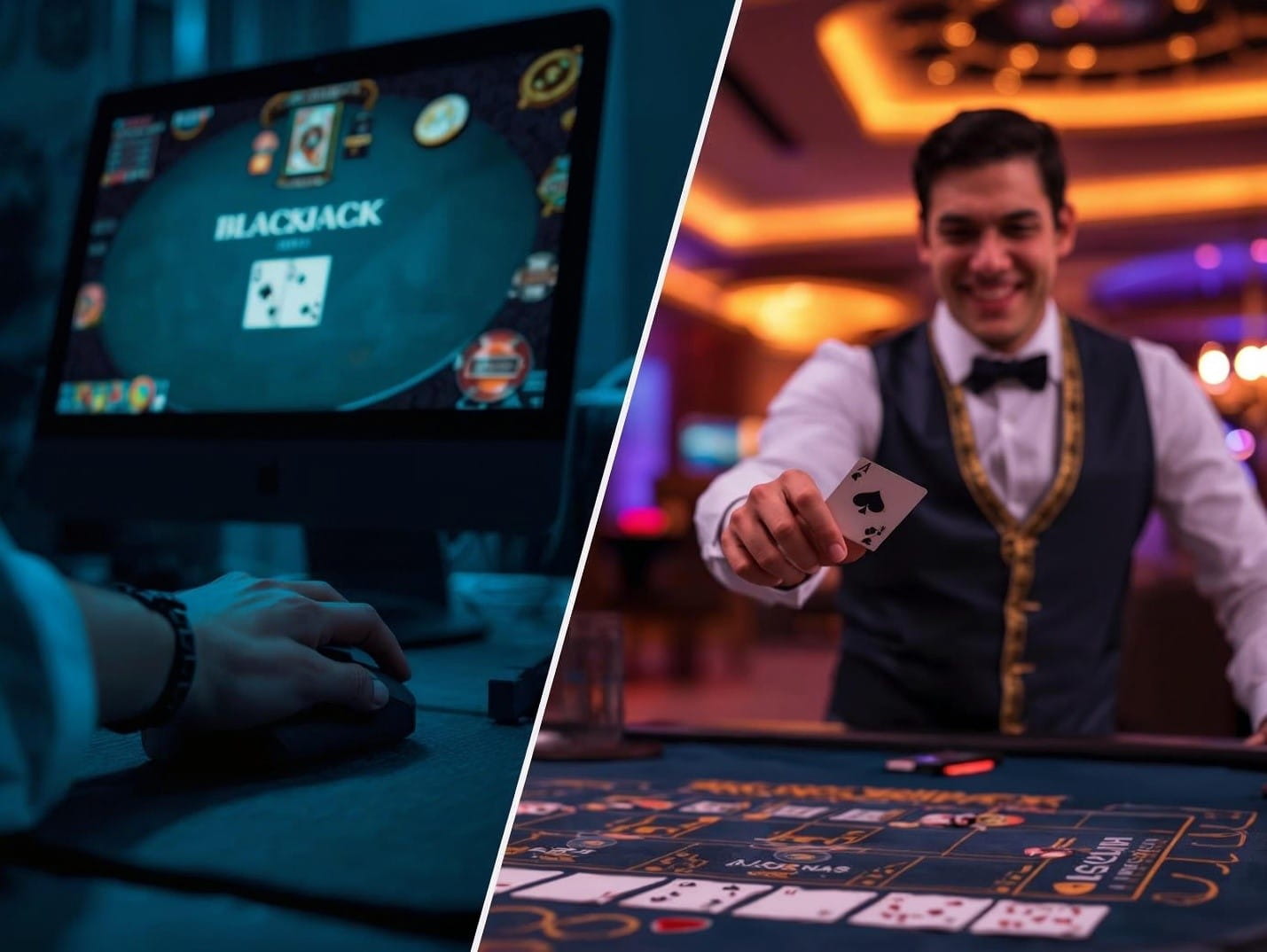
This innovation did more than just improve the graphics; it changed the way gamers use digital platforms in a big way. Live dealers have changed the way players think, how long they play, and even how much trust there is in the ecosystem by bringing back the human aspect. This is a permanent change in the world of online gambling.
The restoration of visual trust is one of the most important changes in how players act. For a lot of conventional gamblers, RNG software was still a “black box,” no matter how many times it was checked for fairness. High-volume players were afraid that the house could tighten or loosen a computer program, which made them less likely to play.
Live dealers brought back “the eye test,” which revolutionized this. When a player sees a genuine person shuffling a deck of cards or a real ivory ball spinning on a real roulette wheel, they don’t think that the cards are being changed digitally anymore. This has caused players to bet more on live tables than on automated versions of the same game, which is a trust-based way of betting.
Before live dealers, gambling online was typically a lonely activity. The “social catalyst” effect is the main change in behavior that live broadcasting has caused. Players can now talk to the dealer and other players at the table in real time through text interfaces.
This social layer has made gambling sessions into fun occasions. Players don’t just check in just to win or lose anymore; they log in to talk to other players. This behavior is similar to the “Third Place” theory in sociology, which says that there are social settings that are different from home and work. Players are less inclined to “hit and run” (win a little and leave right away) and more likely to stay for the whole dealer’s shift since they feel like they are part of a community.
The data from the industry shows that live dealer games have much longer average session times than their RNG competitors. The “host” effect is mostly to blame for this. Like a talk show host or a bartender, a charming, professional dealer keeps the energy up even when people are losing.
In a regular digital blackjack game, the interface resets right away when a player loses a hand, and the next wager is made. This mechanical pace might make people tired of betting. In person, the dealer may say something kind or share a moment of sadness. This engagement with other people helps ease the pain of losing, lowers the chance of “tilt” (betting when you’re upset), and encourages a slower, steadier pace of play.
When we look at the data, the differences in how players engage with these two formats are striking. While RNG games offer speed, live dealer games offer depth.
| Metric | RNG (software) | Live dealer (human) |
| Average session length | 12–20 minutes | 45–90 minutes |
| Trust rating (user surveys) | Moderate (skepticism of rigged code) | High (visual verification of physical tools) |
| Social interaction | Zero (solitary play) | High (real-time chat with dealer & players) |
| Pace of play | Very fast (60+ hands/hr) | Moderate (30–40 hands/hr) |
| Primary demographics | Casual/mobile “killers of time” | Strategic/high-stakes/social seekers |
Live dealers have also made the average online player more serious and skilled. Players have more time to deliberate because live games run at a speed set by people dealing cards, collecting chips, and declaring wins.
A person can play 60 hands of blackjack in an hour in an automated game. That number goes down to 30 or 40 when it’s live. This slower pace has led to the use of more advanced techniques. Players are more likely to keep “cheat sheets” or strategy charts open in another tab. They approach the game with the same level of professionalism that used to be reserved for high-limit rooms in Las Vegas or Macau.
You need to pay more attention to the real environment than you do in basic button-mashing games.
The portable casino becoming normal is probably the most significant change in behavior. Live dealers may now be streamed in high HD on cellphones without any lag. This has led to a “pocket casino” behavior, when gamers play live games while they are on their way to work, during lunch breaks, or while watching TV.
Live dealer games need the player’s undivided attention, unlike slots, which are commonly played in short, distracted bursts. This has changed how people use their phones from “filler” entertainment to “destination” entertainment.
Today’s players want a high-fidelity, live human experience, which means that operators have to put more emphasis on bandwidth and streaming quality than on dazzling animations.
It’s not as easy as just turning on a webcam to host a live dealer game. To make sure the experience is smooth, it needs a huge infrastructure called a Game Control Unit (GCU) and specific broadcast studios.
This is the most important piece of technology.
OCR cameras keep an eye on everything that happens, including the suit of a card, the number on the roulette wheel, or the spin of a wheel. They then turn that physical data into digital code right away. This lets the program show you your winnings and losses on your screen in real time, just like the dealer sees them.
Lag is bad for gambling because it means making real-time financial decisions.
WebRTC technology helps studios make sure that the video feed is less than 200 milliseconds behind real life. The player loses trust if the stream stutters. That’s why top-tier sites spend millions on specialized fiber-optic lines for their broadcast hubs in places like Latvia, Malta, and the Philippines.
A GCU, which is about the size of a shoebox, is on every table. It encodes the video and works with the OCR to make sure the game “knows” what’s going on.
If there were no GCUs, live broadcasting a casino game would just be a video. The GCU makes it a legal, interactive gambling transaction.
The outcome of a digital game happens right away. There’s a period of anticipation in a live game. The few seconds it takes for the roulette ball to lose speed or for the dealer to flip the “river” card in a game of casino Hold’em make your brain respond in a different way.
Players get more dopamine rewards when they have to wait for something.
Behavioral scientists have shown that the near-miss or slow-burning win in real life is more remembered than a digital flash on a screen. This makes people more devoted to the company since they will go back to the same dealer every day, which is a kind of relationship that standard internet platforms can’t copy.
As we look ahead to the next ten years, casinos will act more and more like hyper-realism. With the advent of Augmented Reality (AR), live dealers will soon be able to “sit” at a player’s real kitchen table using a headset. This will make the barrier between physical and digital reality even blurrier.
Live dealer games that are like “game shows” are also becoming more popular. These games are a mix of traditional gambling and TV entertainment. This has drawn in a younger crowd that cares more about the experience and the show than the odds. The current player isn’t simply seeking a bet; they want to be the main character in a show.
While the shift toward human-led digital gaming has revolutionized the industry, it isn’t without its trade-offs. Players must often choose between the raw efficiency of software and the atmospheric engagement of a live broadcast. Understanding these nuances helps players decide which environment suits their specific betting style and bankroll management.
Below is a breakdown of the pros and cons of choosing live dealer games over traditional RNG (software-based) versions.
| PROS | CONS |
| Verifiable fairness: Watching a human physically shuffle cards or spin a wheel eliminates the “black box” skepticism of computer algorithms. | Slower pace: Human actions take time; you’ll play significantly fewer hands per hour compared to instant software results. |
| Enhanced social interaction: The ability to chat with dealers and other players recreates the communal buzz of a brick-and-mortar casino. | Higher minimum bets: Because of the high cost of studios and staff, seat minimums are often higher than $0.10 or $1.00 software games. |
| Psychological buffer: Real-time dealers provide a natural break between rounds, which can help prevent impulsive, emotional “tilt” betting. | Technical dependency: A weak internet connection can cause lag or disconnections, which is much more disruptive in a live stream than in a basic app. |
| Strategic environment: The slower cadence allows players more time to consult strategy charts or calculate odds before placing a bet. | Capacity limits: Just like a real casino, popular tables can fill up, sometimes forcing you to bet behind or wait for a seat to open. |
| Immersive atmosphere: High-definition multi-camera angles and professional studio lighting provide a premium, “VIP” entertainment experience. | Table etiquette: While digital, players are expected to be respectful in chat; disruptive behavior can result in being banned from the table. |
Live dealers have made the online casino experience more real by adding a video feed. Live technology has turned the casual clicker into a focused, social, and strategic player by meeting basic human needs like trust, social contact, and storytelling.
As technology gets better, the solitary gambler may soon be a thing of the past. Instead, there will be a global community connected by the flip of a card and a dealer’s “Good luck” message that’s sent in real time from thousands of miles away.
KEY TAKEAWAYS: