Cities don’t just rise from the ground—they are marketed into existence long before the first stone is laid. And few visions are sold more aggressively than the promise of a future casino capital. Grand resorts, glittering towers, futuristic monorails, 24/7 entertainment boulevards… Developers pitch them as the next Las Vegas, the next Macau, the next great gaming frontier. Politicians see jobs. Investors see profits. The public is told it will transform a region forever.
But behind every successful casino city are dozens of ghost towns, failed mega-projects, and abandoned dreams. These are the casino cities that never happened—ambitious plans that collapsed under financial crises, political resistance, regulatory disputes, or simply unrealistic ambition.
This is the story of five places that promised to become global gambling hubs but never made it past the blueprint stage.
In 2007, deep in the dusty plains of Los Monegros, the autonomous region of Aragón unveiled one of the most audacious urban megaprojects Europe had ever seen: Gran Scala. Marketed as “the Las Vegas of the desert,” it promised a new city built from scratch—32 casinos, 70 hotels, five theme parks, two stadiums, 200 restaurants, and a population of nearly 100,000. It would be Europe’s entertainment capital, a year-round resort drawing millions from Spain, France, and beyond – from Europe.
The plan arrived just before the global financial crisis, riding the final wave of Spain’s real-estate fever. Developers dazzled regional leaders with digital renders showing glittering skyscrapers rising from barren land. Local landowners were told fortunes were coming their way. Politicians saw a future tourism boom that would revive an economically depressed northeastern region.
But Gran Scala was too big, too fast, too vague. Most of the companies backing the project were small or unknown. The funding structure was shaky. Environmental concerns mounted. And when the 2008 crisis hit, the project’s fragile financial foundation collapsed almost overnight. By 2015, it was clear: not a single casino, hotel, or park would ever be built.
Today, Gran Scala exists only in PowerPoint slides—a mirage in the desert, evaporated by economic reality.
Why it failed:
Gran Scala remains one of Europe’s biggest urban development “what-ifs”—a failed casino city that could have reshaped Spain’s tourism landscape.
If Gran Scala was Spain’s wild dream, EuroVegas was its blockbuster sequel.
In 2011, Las Vegas Sands—then the world’s most powerful casino operator—announced plans to build a $30 billion resort city near Madrid. The first phase alone included six casinos, twelve giant hotels, a mega convention center, replicas of Times Square and Venice, and thousands of housing units. By the time full build-out was complete, EuroVegas would be one of the largest resort cities on Earth.
The Spanish government, still reeling from recession, saw salvation. Madrid initially beat Barcelona in the race to host the project, offering tax incentives and regulatory flexibility that only a nation’s capital city could. For a moment, it seemed the “European Las Vegas” was inevitable.
But the deal unraveled as quickly as it rose. Las Vegas Sands demanded far-reaching concessions: exemption from indoor smoking bans, special tax treatment, and legal protections from future regulatory changes. Spanish leaders balked. Public protests mounted. Environmentalists fought the project. And Europe’s broader hesitation toward large-scale casino legalization added political friction.
By late 2013, Las Vegas Sands officially pulled out. EuroVegas vanished.
Why it failed:
EuroVegas remains a symbol of megaproject hubris—a dream that never crossed the boundary from negotiation to construction.
Across the world, in Central Asia, Kazakhstan once flirted with building its own casino capital on the shores of Kapchagay Reservoir. In the late 2000s, after the government restricted legal gambling to two zones, Kapchagay became the centerpiece of an ambitious plan to create a casino city supporting Almaty’s growth.
Developers announced that Kapchagay would anchor a broader megacity known as G4 City, consisting of four futuristic “satellite cities” built between Almaty and the Chinese border. Within this vision, Kapchagay was meant to be the entertainment and casino hub, complete with multi-billion-dollar resorts, theme parks, and a new urban identity.
The idea was bold: turn a Soviet-era lakeside town into the region’s Las Vegas.
But the 2008 global crisis, combined with bureaucratic delays and fluctuating investor interest, pushed the casino-heavy development into limbo. Over time, government messaging shifted. G4 City was rebranded as Alatau, a modern smart-city concept focused on clean tech, education, and green industry—not gambling.
Instead of casino mega-resorts, the region now features residential developments, business parks, and infrastructure improvements. Kapchagay still has legal casinos—several medium-sized venues that attract domestic visitors—but the dream of a purpose-built casino city of international scale quietly dissolved.
Why it failed:
What was once pitched as a glittering gambling city has been reimagined into something far more conventional and far less dramatic.
Cape Verde’s capital, Praia, was once home to a bold vision: build a Macau-style casino resort on Santa Maria islet and transform the archipelago into the Atlantic’s rising gambling hotspot.
The plan, backed by Macau Legend (a company that has now gone from primarily providing both gaming and non-gaming services to providing only non-gaming services), involved a €250 million resort complex with casinos, luxury hotels, entertainment facilities, and new tourism infrastructure. For a small island nation in West Africa seeking foreign investment, this was marketed as a generational opportunity.
Construction began, a causeway was built, and an eight-storey structure started rising—an early signal that the dream was coming to life.
Then everything stalled. Years passed with no progress. Developers clashed with the government over unmet obligations, slow timelines, and questions of financial viability. Eventually, the government terminated the concession, declaring that the developer had failed to fulfill contractual requirements.
What remains today is an eerie sight: a half-built resort overlooking the Atlantic, fenced off and abandoned. Locals now refer to it as a ghostly monument of misplaced optimism.
Why it failed:
Praia’s unfinished resort shows how fragile casino megaprojects can be—especially for small countries without deep tourism infrastructure or political margin for error.
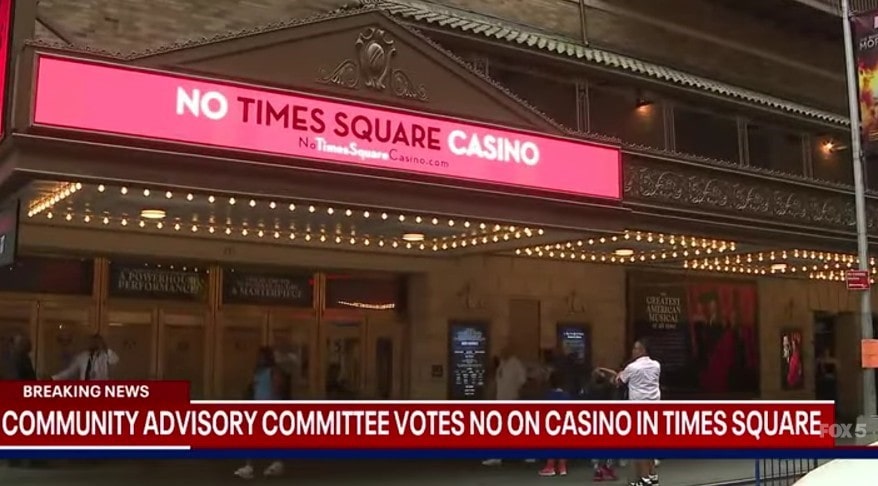
It might sound strange now, but between 2022 and 2025, New York City looked closer than ever to getting its first Las Vegas–style casino.
Developers proposed three competing multi-billion-dollar resorts:
In the middle of Manhattan, these casinos would have reshaped neighborhoods, brought thousands of jobs, and given New York a new identity as an East Coast gaming hub.
But hope of a “casino city inside a city” died when all proposals faced intense local resistance. Community boards rejected the plans. Lawmakers hesitated. Residents launched fierce campaigns against increased traffic, crime concerns, and fears of turning cultural districts into gambling corridors.
Even in one of the world’s most tourist-heavy cities, the politics didn’t align.
Why it failed:
New York still has slots-based gaming in Queens and Yonkers, but the dream of a full-scale casino “district” in Manhattan has been shelved indefinitely.
If you want to understand how hard it is to build a casino city from scratch, look at the world’s most successful casino city—and its long list of failed megaprojects.
Vegas is littered with colossal dreams that never broke ground:
Even in the most casino-friendly environment on Earth, megaprojects fail regularly. This is important context for understanding the ghost cities above: if Las Vegas can’t get every resort built, how can Madrid, Praia, or rural Spain hope to?
Across these case studies—Spain, Kazakhstan, Cape Verde, and the United States—clear patterns emerge:
Megaprojects need more than ambition
Grand ideas can’t compensate for weak finances, unclear developers, or fragile economic timing. A beautiful render isn’t a city.
Casinos are politically sensitive
Governments may flirt with gambling liberalization, but final approval often clashes with public sentiment, regulatory constraints, or political risk.
The world has only two true casino cities
Despite global appetite, only Las Vegas and Macau have reached the scale and cultural status of true casino capitals. Many have tried to join them; few even get close.
Gaming isn’t enough to build a city
A resort can succeed. Sure. A casino district can attract tourists. Sure. But a casino city—a full urban ecosystem—is vastly more complex.
These projects weren’t just resorts; they were attempts to engineer entire urban landscapes overnight. And cities, by nature, resist being manufactured on command.
| PROS | CONS |
| Massive economic potential – Casino cities can generate billions in tourism, hospitality, and gaming revenue, and create large-scale employment. | High financial and construction risk – These megaprojects demand huge upfront investment and often collapse when markets shift or funding dries up. |
| Urban revitalization catalyst – They are often pitched as tools to redevelop neglected regions, bringing new infrastructure, transport links, and business districts. | Political and regulatory barriers – Public resistance, zoning disputes, and restrictive gambling laws frequently halt or heavily delay projects. |
| Global branding and investment appeal – A successful casino hub can elevate a country’s profile, attracting foreign capital and international visitors. | Unrealistic expectations – Many plans underestimate the difficulty of building an entire city from scratch, leading to stalled developments or abandoned structures. |
“Casino Cities That Never Happened” is ultimately a story about the tension between vision and viability. Developers around the world will continue pitching dreamlike gambling metropolises. Some will gain traction. A few might even reach partial completion. But many will end up like Gran Scala, EuroVegas, and Praia’s abandoned resort—memories of a future that never came to be.
In a world where capital moves quickly, political winds shift unpredictably, and tourism trends evolve fast, building a global gambling hub remains one of the hardest challenges in urban development.
Dreams are cheap.
Blueprints are easy.
But true casino cities? Those are almost impossible.
KEY TAKEAWAYS: